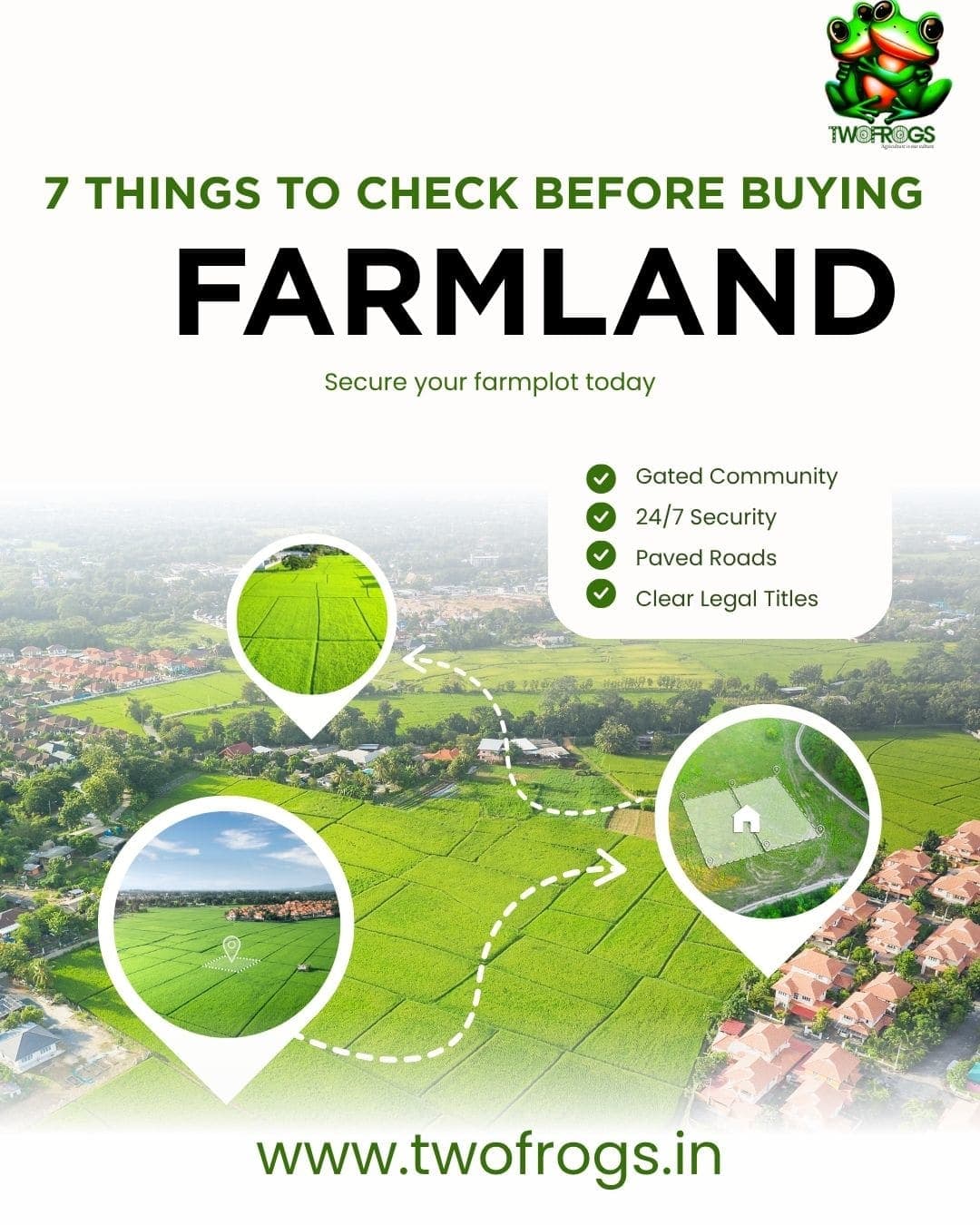
Buying farmland sounds simple. You find a beautiful property, imagine mango trees around you, picture peaceful weekends away from the city, and think, “This could be mine.” But before you fall in love with the view, check what lies behind it. Good farmland isn't just about how the land looks; it's about what you legally own, what you're paying for, how the land can be accessed, and who takes care of it. If you're buying farmland in Karnataka for the first time, here are 7 things to check before signing on the dotted line.
1. Check the Land Documents
Check key documents such as RTC, mutation records, sale/parent deeds, Encumbrance Certificate, survey records, tax receipts, and conversion or succession documents where applicable. Karnataka’s Bhoomi system provides access to land-record services. Don’t rely on promises verify the documents independently before buying.
2. Verify the Survey Number and Boundaries
The land you visit should match the land in the do Karnataka’s Dishaank systemcuments. Verify the Survey Number, Hissa Number, extent, boundaries, and actual location. can help check spatial information related to survey numbers. If the brochure says 2 acres, the records should say 2 acres too.
3. Check the Legal and Registration Status
Before paying a booking amount, check the property’s legal status. Verify the title, encumbrances, disputes, restrictions, and what will actually be registered in your name. Karnataka’s Kaveri system provides registration and Encumbrance Certificate-related services.
4. Check Road Access and Connectivity
Farmland should be an escape not an obstacle course. Check the approach road, road width, legal access, internal roads, connectivity, monsoon accessibility, and emergency access. Imagine driving there on a Friday evening and ask yourself: “Would I enjoy coming here regularly? “The land matters but getting there matters too.
5. Check Water, Soil and Farming Potential
Farmland is more than land it’s about its agricultural potential. Before buying, understand the water source, irrigation system, borewell or open-well availability, water storage, soil condition, existing plantations, proposed crops, farming practices, and maintenance plan.
6. Understand What Your Money Actually Covers
Farmland is more than the price per square foot. The overall cost may include land, registration, development, plantations, infrastructure, amenities, management, and maintenance. A lower-priced property may offer only undeveloped land, while another may include roads, water infrastructure, plantations, amenities, and ongoing management. Compare what is included in the price not just the price itself.
7. Understand Management and Maintenance
Managed farmland adds another important question: who looks after the land when you're away? Understand who manages the farm, maintains plantations, handles farming activities, provides updates, and manages amenities. Also check maintenance charges, additional costs, and the responsibilities of both the owner and management team. In simple terms: You own the land; the agreed management team handles the specified farm activities. Read the agreement carefully and understand exactly what is included, what it costs, and who is responsible for what.
A. How TwoFrogs Approaches Managed Farmland?
At TwoFrogs Managed Farmland, it’s more than simply buying land. The model brings together land ownership, managed farm development, maintenance, and experiences, based on the specific project and agreed terms. You own the land. We stay with it. From plantations and farm management to spaces for family time and reconnecting with nature, the focus is on building a long-term relationship with the land. As with any land purchase, understand the documents, agreements, costs, and services before making a decision.
B. Frequently Asked Questions
What should I check before buying farmland?
Check ownership, title documents, RTC, mutation, survey details, boundaries, Encumbrance Certificate, road access, water availability, applicable permissions, costs and management responsibilities.
What documents should I verify before buying farmland in Karnataka?
Depending on the property, review title deeds, RTC, mutation records, Encumbrance Certificate, survey records, tax receipts, conversion documents where applicable, and succession-related documents where relevant.
Why is the survey number important?
It helps identify the specific parcel of land and allows buyers to compare the property on the ground with the relevant land records.
What should I check in managed farmland?
Understand what you own, what services are provided, plantation and farm-management responsibilities, maintenance charges, amenities, agreements and your responsibilities as an owner.
Is managed farmland the same as buying agricultural land?
Not necessarily. Managed farmland can combine land ownership with agreed farming, development and maintenance services. The exact structure depends on the project and legal agreement.
The conclusion
The trees may look beautiful, the location may feel perfect, but before the coffee under the mango tree comes the paperwork.
Check the land, Check the documents, Check the access, Check the water, and check the agreement.
Then make an informed decision Because buying farmland isn’t about rushing it’s about knowing what you’re buying and why
Explore managed farmland with TwoFrogs at www.twofrogs.in.
Sources for verification: Karnataka Bhoomi land-record services, Karnataka Kaveri registration services and Dishaank spatial land information. Buyers should independently verify property-specific documents and seek professional legal advice before completing a purchase.