Introduction
You may want to invest in farmland in Bengaluru, but you may not know when to plant, how to manage irrigation, where to find farm labour or how to sell produce. That gap often stops people from buying agricultural land. Managed farmland changes this equation by bringing professional farming expertise to the landowner.
What Is Managed Farmland?
Managed farmland is agricultural land where professional teams handle farming, plantation maintenance, irrigation, harvesting and day-to-day farm operations on behalf of landowners.
This model helps people own agricultural land without managing every farming activity themselves. Instead of simply owning unused land, you can participate in an organised agricultural ecosystem.
That is where TwoFrogs connects land ownership, farming and long-term value creation. Its approach combines sustainable farming, professional management and technology such as smart irrigation and farm monitoring.
How Can You Earn From Farmland Without Knowing Farming?
The answer starts with choosing the right crop and management model.
A productive acre can generate income through multiple harvest cycles, crop combinations and value-added opportunities. However, ₹1 lakh per month from one acre is not a guaranteed or universal outcome. Actual agricultural profit depends on crop, yield, market price, location, weather, operating costs and farm management.
Professional management can reduce the knowledge gap. At TwoFrogs, different projects use different plantation combinations to create diversified agricultural landscapes.
Spice Hills: Where Spices Meet Wellness
Located in Koppa, Chikkamagaluru, Spice Hills combines managed farmland with a naturopathy and wellness retreat. Its farming model focuses on spice cultivation, while the destination adds yoga, trekking and nature-led experiences.
The plantation ecosystem includes black pepper, Robusta coffee, cinnamon, green cardamom, nutmeg, avocado, arecanut, bay leaf and cloves. This crop diversity creates a stronger connection between farmland investment and agricultural production.
Close To Heaven: Hilltop Farmland With Long-Term Potential
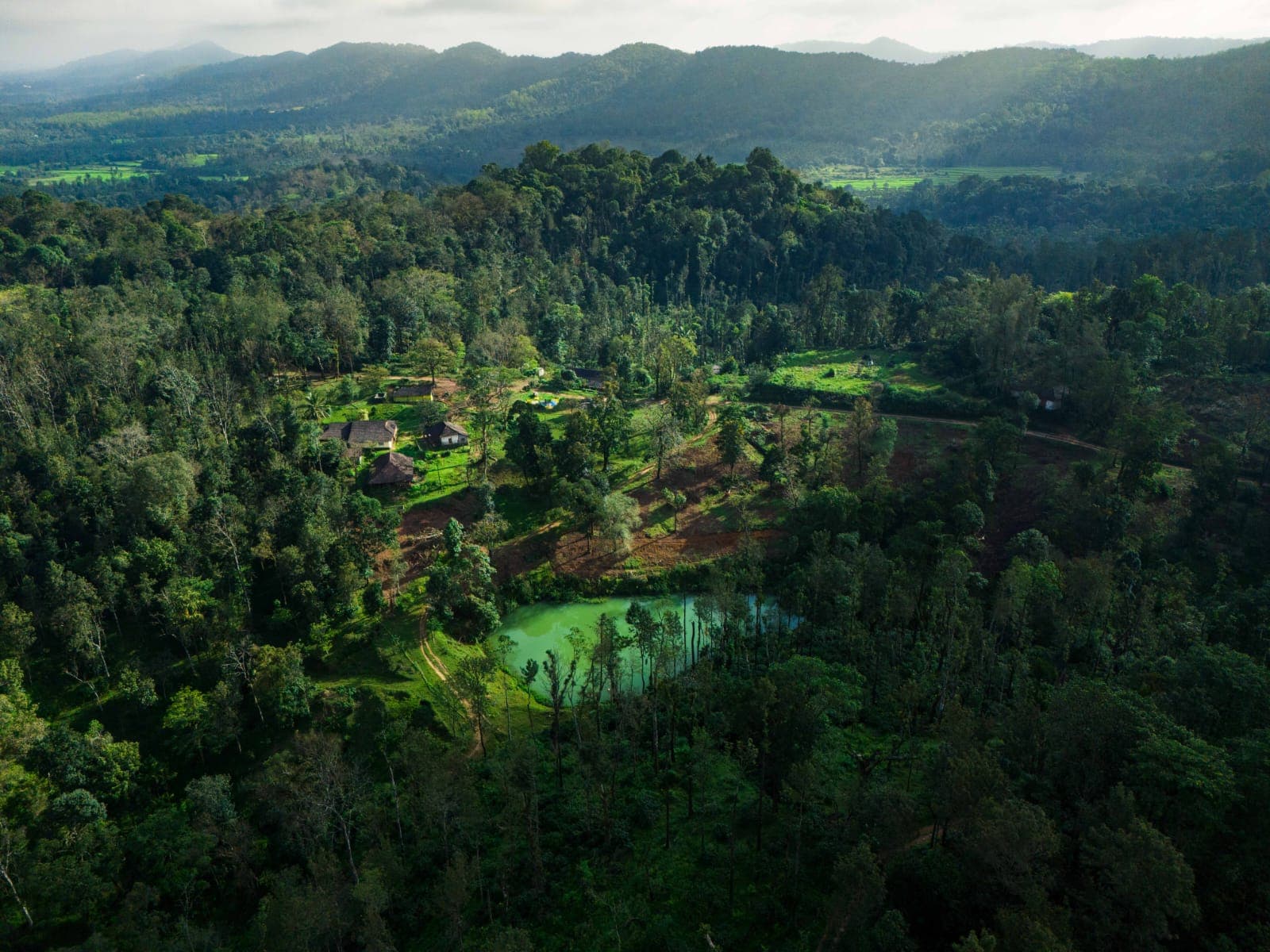
Close To Heaven spans 200 acres of premium hilltop managed farmland between Sringeri and Koppa in the Western Ghats. Coffee and pepper plantations define its agricultural character, while the project also offers resort-style amenities, nature trails and options for holiday cottages.
The project demonstrates how farmland can combine agriculture, lifestyle and long-term land appreciation instead of functioning as a conventional agricultural holding.
The Aurum: A Premium Nature-Led Investment
The Aurum adds another dimension to the TwoFrogs portfolio by bringing together premium land ownership, nature and a curated agricultural lifestyle. Its positioning reflects the growing demand for farmland that offers more than cultivation alone—creating space for relaxation, connection with nature and long-term asset ownership.
Mother Earth Heritage: Agriculture Close to Bengaluru
Mother Earth Heritage brings managed farmland closer to Bengaluru, near TB Cross on the Talkere–Turuvekere Road. The project features pepper, sandalwood, arecanut and avocado plantations, combining agricultural potential with a lifestyle-oriented environment.
The project also integrates amenities such as a clubhouse, sports zone, children’s play area, open kitchen and nature-focused experiences.
Oro Land: Where Land Ownership Meets Agriculture
Oro Land continues the same philosophy: give people an opportunity to own land while connecting that ownership with professionally managed agricultural development. Instead of asking every investor to become a farmer, the managed-farmland approach puts farming expertise, maintenance and cultivation systems around the landowner.
What Happens If There Are No Farmers?
This question reveals why professional farming matters.
If fewer people farm, food production faces pressure. Land alone cannot produce crops. Farmers, agricultural knowledge, technology, irrigation and farm management make land productive.
That is why managed farmland can play an important role. It connects landowners with agricultural professionals, allowing productive land to remain actively cultivated even when the owner does not have farming experience.
Is It Profitable to Buy Farmland?
Farmland can become profitable through a combination of crop income and land appreciation, but profitability never comes automatically.
Location, soil quality, water availability, crop selection, professional management, market demand and purchase price all influence the outcome.
The smarter question is not simply, “Is farmland profitable?” It is:
“Is this farmland being managed well enough to create long-term value?”
FAQs
1. How to earn ₹1 lakh per month from 1 acre land?
There is no guaranteed formula. Achieving ₹1 lakh monthly requires high-value crops, strong yields, efficient operations and favourable market prices. A professional feasibility assessment should come before making such an income expectation.
2. What happens if there are no farmers?
Food production can decline, agricultural land can become underutilised and food supply can face greater pressure. Professional managed farming helps keep agricultural land productive.
3. Is it profitable to buy farmland?
It can be, when location, crops, management, market demand and land appreciation work together. Investors should evaluate each project carefully rather than assume guaranteed returns.
4. Can a normal person buy agricultural land in India?
Eligibility and purchase rules vary by state and by the type of agricultural land. Buyers should verify the applicable state laws, title documents and land-use regulations before purchasing.
5. How much profit is in 1 acre of agricultural land?
Profit varies significantly by crop, yield, input costs, labour, irrigation, market prices and farm-management practices. There is no single profit figure that applies to every acre.
Conclusion
Owning farmland does not require you to know everything about farming.
- Land gives you ownership.
- Plantations create agricultural potential.
- Professional management helps turn plans into farm operations.
- The right location and crop mix can support long-term value.
From the spice plantations of Spice Hills and the Western Ghats landscape of Close To Heaven, to The Aurum, Mother Earth Heritage and Oro Land, TwoFrogs brings together land, agriculture and nature-led living.
The future of farmland is not only about owning more land.
It is about owning land that is actively managed, meaningfully planted and built for tomorrow.