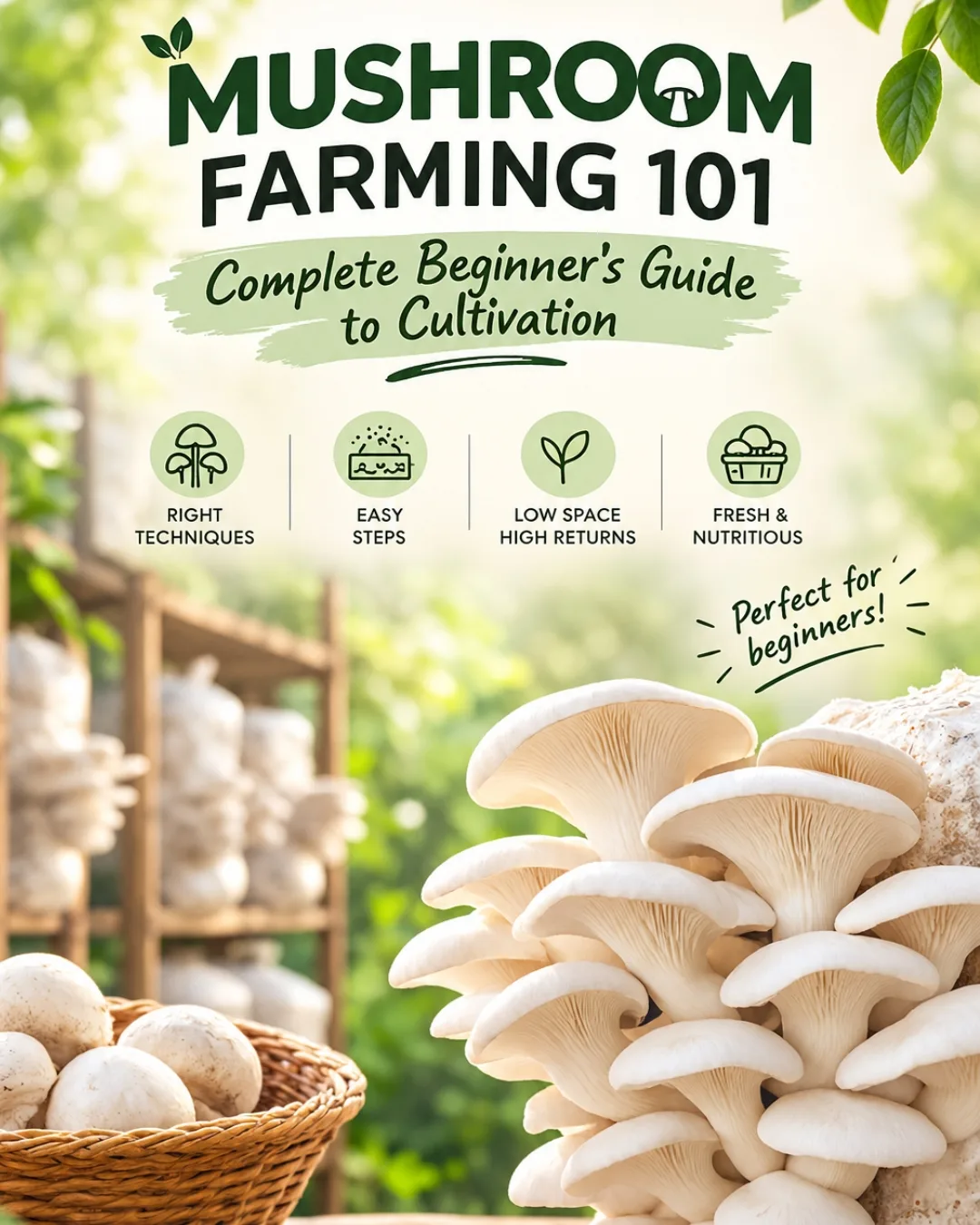
Mushroom farming looks simply until you try to grow a healthy batch. A bag of substrate, some mushroom spawn, a little patience, and hopefully, fresh mushrooms but what happens between spawn and harvest is where the real story begins. Unlike traditional crops that grow in open fields, mushroom cultivation requires a carefully managed environment where temperature, humidity, ventilation, cleanliness, substrate quality, and timing can all influence crop development. That is why mushroom farming is more than simply growing fungi; it is about creating the right conditions for a living crop to grow consistently. If you're a beginner exploring mushroom farming in India whether you're a farmer, entrepreneur, investor, or simply curious about modern agriculture understanding these basics can help you take your first step with greater clarity.
A. How Does Mushroom Cultivation Work?
A basic mushroom cultivation cycle looks something like this:
Select the mushroom → Prepare the substrate → Add spawn → Incubate → Create fruiting conditions → Harvest → Pack → Sell
1. Choose the Right Mushroom
Before buying equipment or setting up a growing room, decide which mushroom you want to grow. Different varieties have different temperature, humidity, substrate, infrastructure, and market requirements. Oyster mushrooms are often considered beginner-friendly, while button mushrooms need more controlled conditions. Milky mushrooms can suit warmer climates with the right cultivation methods, while King Oyster mushrooms require more controlled growing conditions. The key is not to ask, “Which mushroom is most profitable?” but rather, “Which mushroom suits my climate, infrastructure, skills, and market?” That simple question can help beginners avoid costly mistakes.
2. Understand Mushroom Spawn
Now let's talk about spawn the starting material that introduces mushroom mycelium into the growing substrate. Mycelium is a network of fine fungal threads that gradually spreads through and colonizes the substrate. Because the quality of spawn can influence the production cycle, beginners should source it from a reliable, technically competent supplier rather than producing it themselves. Proper handling and hygiene are also essential, as contamination can affect the crop before it even begins to develop.
3. Prepare the Substrate
Mushrooms don't grow in ordinary agricultural soil they grow on a suitable substrate, such as paddy straw for oyster mushrooms. Before adding spawn, the substrate must be properly prepared because it can support both the desired mushroom and unwanted microorganisms. Depending on the mushroom and cultivation method, processes such as pasteurization or sterilization are used to create a cleaner environment that supports healthy mushroom growth.
4. Spawning: Introducing the Mushroom to Its Growing Medium
Once the substrate is ready, the spawn is introduced a process known as spawning or inoculation. This is a critical stage because contamination can affect the crop before it gets established. Growers should use clean equipment and surfaces, quality spawn, proper handling, suitable moisture, and good hygiene throughout the process. A small mistake during inoculation can turn into a much bigger problem later.
5. Incubation: The Stage You Don't See Much
Incubation may look like the quietest stage of mushroom farming, but there is plenty happening beneath the surface. During this phase, the mycelium spreads through and colonizes the substrate. The time required varies by mushroom species and cultivation method, while factors such as temperature, moisture, and cleanliness need to remain under control. So, even when the bags appear to be simply sitting on a rack, the grower is actively managing an important biological process.
6. Fruiting: When Mushrooms Finally Appear
And then comes the moment everyone waits for the mushrooms appear. Small pins begin forming and gradually develop into recognizable clusters. This stage is called fruiting, and it requires suitable conditions such as temperature, humidity, fresh-air exchange, moisture, light where relevant, and cleanliness. Since requirements vary by species, there is no one-size-fits-all setting for a mushroom-growing room. The right conditions depend on what you're growing.
7. Humidity: More Water Doesn't Always Mean More Mushrooms
One common beginner mistake is assuming that more moisture means better mushroom growth. In reality, mushroom cultivation requires balance. Too little moisture can affect development, while excessive moisture combined with poor ventilation can encourage problems. That is why growers monitor the environment using tools such as humidity meters, temperature sensors, misting systems, ventilation systems, and environmental controllers. The goal isn't to make the room wet it is to create the conditions the mushroom actually needs.
8. Ventilation Matters More Than Beginners Expect
Mushrooms need the right air exchange to develop properly. Poor ventilation can affect growth and create unwanted conditions, while excessive airflow can dry the growing environment. That is why successful mushroom cultivation comes down to balance and consistency not doing more but creating and maintaining the conditions the crop needs.
9. Hygiene: The Most Underrated Part of Mushroom Farming
One of the biggest challenges in mushroom farming is contamination. The same nutrient-rich environment that supports mushroom growth can also encourage unwanted molds and microorganisms. Good hygiene is therefore essential and may include cleaning growing rooms, sanitizing equipment, using clean water, handling spawn carefully, inspecting bags, removing contaminated material, and cleaning between production cycles. Simply put, a mushroom farmer doesn't just grow mushrooms they protect the crop from everything else that wants to grow there.
B. Mushroom Farming Process at a Glance
Select mushroom variety ↓ 2. Source quality spawn ↓ 3. Prepare substrate ↓ 4. Treat substrate ↓ 5. Add spawn ↓ 6. Incubate ↓ 7. Initiate fruiting ↓ 8. Manage temperature and humidity ↓ 9. Monitor contamination ↓ 10. Harvest ↓ 11. Pack and market
C. What Equipment Is Needed for Mushroom Farming?
A basic mushroom-growing unit may require:
- Growing rooms
- Racks
- Cultivation bags
- Spawn
- Substrate
- Water supply
- Humidity management
- Ventilation
- Temperature monitoring
- Cleaning equipment
- Harvesting equipment
- Packaging materials
A commercial operation may require additional infrastructure for:
- Substrate preparation
- Pasteurization or sterilization
- Incubation
- Fruiting
- Cold storage
- Packaging
- Waste management
D. Frequently Asked Questions About Mushroom Farming
- Is mushroom farming suitable for beginners?
Yes. Beginners can learn mushroom cultivation, particularly by starting with varieties that have established cultivation methods. Oyster mushrooms are commonly used in beginner-oriented cultivation systems.
- Which mushroom is easiest to grow?
Oyster mushrooms are often considered one of the more accessible mushrooms for beginners. However, the right choice depends on your climate, infrastructure and market.
- Can mushrooms be grown without farmland?
Yes. Mushroom cultivation can take place indoors using prepared substrates, so large areas of conventional farmland aren't necessarily required.
- Do mushrooms need sunlight?
Mushrooms don't require sunlight in the same way green plants do. Their cultivation depends more on species-specific environmental conditions such as temperature, humidity, moisture and ventilation.
- What is mushroom spawn?
Spawn is material containing mushroom mycelium that is introduced into a suitable substrate to begin cultivation.
Final Thoughts: Start Small, Grow Smart
Mushroom farming is more than putting spawn in a bag and waiting for a harvest. It requires the right mushroom, substrate, environment, hygiene, and market understanding.
Start by learning the process, understand your costs, and scale only when you're ready.
Want to explore mushroom farming as a business? Discover how SHROOMS can help you take the next step toward structured mushroom cultivation.
Learn, Grow, Scale with SHROOMS.