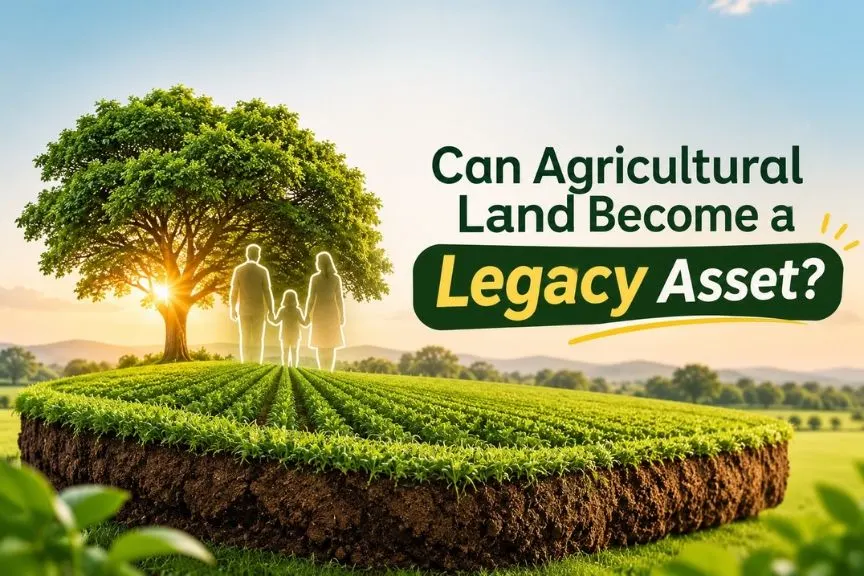
Imagine your children growing up with a piece of land that belongs to your family. A place where mango trees grow year after year, where weekends mean fresh air instead of traffic, and where every visit brings back memories.
Years later, they pass the same land on to their children.
That is the beauty of owning something that can outlast generations.
In a world where investments are often measured by market prices, returns and portfolio performance, agricultural land offers a different perspective. It connects ownership with nature, food production, family memories and long-term responsibility.
1. What Makes Agricultural Land a Legacy Asset?
A legacy asset is something valuable that one generation builds, protects and passes on to the next.
Unlike many assets that serve a specific financial purpose, farmland has multiple possibilities:
· Land ownership: A tangible asset that can remain within a family across generations.
· Food production: Land can support the cultivation of fruits, vegetables, spices and other crops.
· Natural value: Healthy soil, water resources and established plantations can contribute to the land's long-term usefulness.
· Family connection: It can become a shared place for family gatherings, holidays and meaningful experiences.
· Future opportunities: The next generation may explore farming, agricultural entrepreneurship or other permitted land uses.
2. Why Agricultural Land Deserves a Place in Long-Term Wealth Planning
· A tangible asset with practical purpose
Farmland is a physical asset with a productive purpose. Depending on its location, soil, water availability, accessibility and legal status, it may support different agricultural activities.
Its usefulness is not determined by price alone. The quality of the land and how it is maintained matter too.
· A connection to an essential resource: Food
Technology may transform industries and lifestyles, but food will always remain a basic human need. Agriculture supports this essential need, and owning agricultural land creates a connection to food production. However, making farmland productive requires proper planning, resources and responsible management, as ownership alone does not guarantee income or returns
· Potential for long-term appreciation
Well-located agricultural land may appreciate over time depending on infrastructure development, local demand, and land quality and market conditions. However, appreciation is never guaranteed, and farmland may not always be easy to sell quickly. Therefore, it is important to evaluate its long-term suitability, agricultural potential and maintenance requirements rather than making a purchase based solely on promises of rising property values.
3. The Real Value of Farmland Lies in What You Build on It
Imagine buying a piece of agricultural land today.
Initially, it may be an open plot with soil, a few trees and plenty of possibilities.
Now imagine what responsible management could create over the next 10 or 15 years.
· Fruit plantations that mature over time.
· Improved soil health through appropriate farming practices.
· Better water conservation and irrigation planning.
· Regular maintenance and land inspections.
· Productive agricultural activities suited to the location.
With time and proper care, land can become more than just an empty plot; it can develop into a well-maintained agricultural space. This is where professional farm management becomes valuable, especially for owners who cannot visit regularly, as it helps coordinate plantation care, irrigation, crop management and routine maintenance, keeping the farmland cared for over time.
Frequently Asked Questions About Agricultural Land as a Legacy Asset
1. Can agricultural land be passed down to the next generation in India?
Yes. Agricultural land can generally be inherited, but succession depends on applicable personal laws, state-specific land laws and the ownership structure. Families should seek legal advice to understand their specific situation.
2. Is agricultural land a good long-term investment in India?
Agricultural land may be suitable for people seeking long-term tangible asset ownership and an interest in agriculture. However, returns and appreciation are not guaranteed. Location, title, soil, water, marketability and maintenance costs should be evaluated carefully.
3. Does agricultural land increase in value over generations?
It can appreciate, but there is no guarantee. Infrastructure, demand, local regulations, land quality and economic conditions can influence its value. Poor maintenance or legal complications may affect its marketability.
4. How can I maintain farmland if I live in another city or country?
You can explore professional farm management services. Depending on the agreement, these may include plantation care, irrigation, farm inspections and routine maintenance.
5. Is managed farmland suitable for NRIs?
It may be an option for eligible NRIs, subject to applicable Indian laws and restrictions. Under FEMA regulations, NRIs and OCIs generally cannot purchase agricultural land, plantation property or farmhouses in India, although inheritance and certain other situations are treated differently. Always seek specialist legal advice before making a decision.
6. What is the difference between owning farmland and managed farmland?
With conventional farmland ownership, the owner generally arranges and oversees agricultural operations. Managed farmland combines ownership with agreed professional services to help maintain and operate the farm. The exact responsibilities depend on the contract.
Conclusion: Don't Just Build Wealth. Build Something Worth Passing On.
We often spend years saving, investing and building assets to create a better future for our families, but a meaningful legacy can be more than financial inheritance. It can be a piece of land where trees grow, children learn about nature and families create lasting memories. Agricultural land can offer this opportunity when it is legally secure, carefully selected and responsibly maintained. At TwoFrogs Managed Farmland, we believe land ownership comes with a responsibility to care for it over time. We don't just help people own farmland; we help them stay connected to the land they own. Own the land. Stay connected to nature. Let TwoFrogs take care of the farm. Start thinking beyond today's ownership and explore the legacy you could leave for tomorrow.
Sources and research references
1. FAO – Sustainable Land Management: Explains how responsible land, soil and water management supports food security and long-term land productivity. Read FAO research.
2. FAO – Land, Soil and Water: Explains the importance of land and soil to global food systems. Explore FAO resources.
3. Reserve Bank of India – Property Purchase FAQs: Important reference for NRI/OCI restrictions on purchasing agricultural land and inheritance provisions. Read RBI guidelines.
4. Government of India – Digital India Land Records Modernization Programme: Useful for understanding India's land-record digitisation initiatives. Explore land records programme.