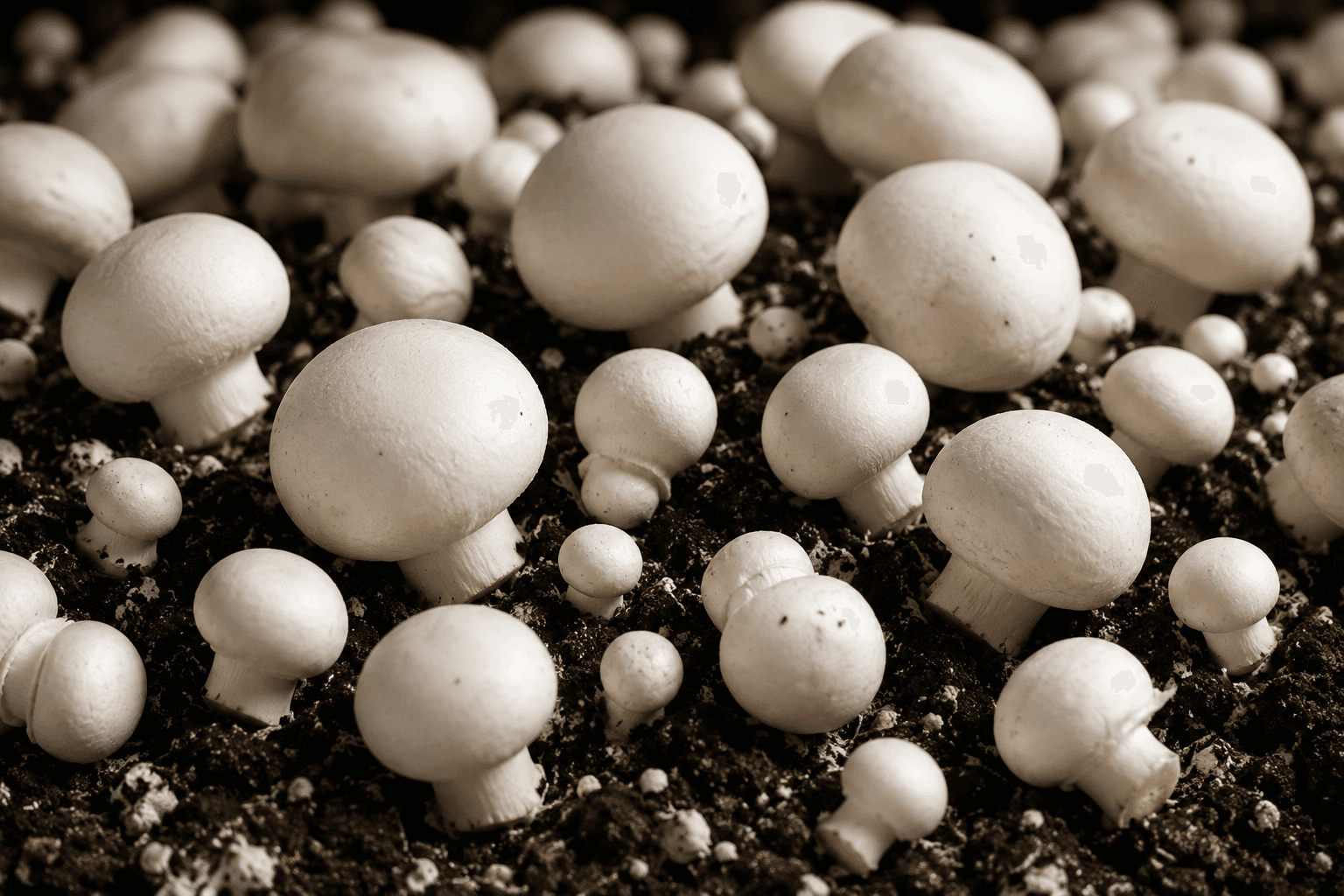
Mushroom farming is attracting growing attention from farmers, entrepreneurs and investors looking for new opportunities in Indian agriculture.
Traditional farming often requires large areas of land and long waiting periods before a crop becomes productive. Mushroom cultivation follows a different model. It allows growers to use controlled environments, optimize space and cultivate certain varieties within relatively short production cycles.
This is why mushroom farming investment is becoming an interesting part of the conversation around smart farming in India.
Why Is Mushroom Farming Becoming a Smart-Farming Opportunity?
Smart farming is about using resources efficiently and making better farming decisions. Mushroom cultivation fits this approach by using compact, vertical growing spaces, offering relatively short production cycles, turning agricultural residues such as paddy straw into useful growing substrates, and allowing growers to control key conditions like temperature, humidity and ventilation. Together, these advantages make mushroom farming an interesting and resource-efficient agricultural model, while still requiring proper technical management and market planning.
Why Is Mushroom Farming Important for the Future of Agriculture?
Agriculture is changing, and so is the way we think about farming. As land and water become more valuable, mushroom cultivation offers a smart alternative by using compact spaces, controlled growing environments, agricultural residues and relatively short production cycles. It also creates opportunities for value-added food businesses while complementing traditional agriculture. However, mushroom farming is not a guaranteed-return investment—it is a specialized business with its own opportunities and risks, making proper planning and understanding essential before investing.
SHROOMS and the Future of Managed Agriculture
SHROOMS brings mushroom cultivation into the wider agricultural ecosystem of TwoFrogs Managed Farmland, where agriculture goes beyond land ownership to focus on productive land, professional management and responsible cultivation. The Thuruvekere, Karnataka project adds to this vision by bringing together farmland, cultivation and nature in a rural setting. As mushroom farming requires specialized infrastructure and controls growing conditions, any specific SHROOMS cultivation opportunity or production facility at Thuruvekere should be confirmed directly with the TwoFrogs team.
Frequently Asked Questions About Mushroom Farming
Is mushroom farming profitable in India?
Yes, mushroom farming can generate income in India. However, profitability varies according to mushroom variety, yield, input costs, selling price, market access and operating efficiency.
How much investment is required for mushroom farming?
Investment depends on production scale, mushroom variety and infrastructure. A small oyster mushroom unit requires considerably less infrastructure than a large commercial facility.
How long does it take to grow mushrooms?
The production cycle depends on the mushroom variety and cultivation system. Some varieties can reach harvest within several weeks. ICAR has reported a 30–35-day production cycle for a King Oyster cultivation system under its reported conditions.
Which mushroom is best for farming in India?
Oyster, button and milky mushrooms are among the varieties cultivated in India. The right variety depends on climate, infrastructure, technical expertise and market demand.
Can mushroom farming be done on small land?
Yes. Mushrooms can be cultivated indoors, and vertical racks can help growers use available space efficiently.
Is mushroom farming better than traditional farming?
Not necessarily. Mushroom farming follows a different production model and can complement traditional agriculture rather than replace it.
What are the biggest risks in mushroom farming?
Contamination, poor-quality spawn, unsuitable environmental conditions, labor costs, inconsistent production, spoilage and weak market access can affect profitability.
Conclusion:
Mushroom farming is a business that requires knowledge, planning, quality inputs, efficient production and reliable markets. However, its ability to use compact spaces, controlled environments, agricultural residues and relatively short production cycles makes it an interesting opportunity within India's evolving agricultural landscape. From orchards and agroforestry to controlled mushroom cultivation, agriculture can become more diversified, resource-conscious and technology-driven.
Grow Smarter With SHROOMS
Ready to explore the future of mushroom cultivation? Discover SHROOMS by TwoFrogs — connecting smart cultivation, fresh farm-grown mushrooms and a new generation of agricultural thinking.
From Thuruvekere farmland to fresh mushrooms, SHROOMS brings you closer to the journey from cultivation to consumption.
Explore SHROOMS. Discover smarter farming. Taste the difference.